
We’ve all been there: you’ve finally hit your stride with a consistent workout routine, and then—bam—you wake up with a scratchy throat or a pounding headache. The internal debate begins: Do I push through and “sweat it out,” or do I stay in bed and risk losing my momentum?
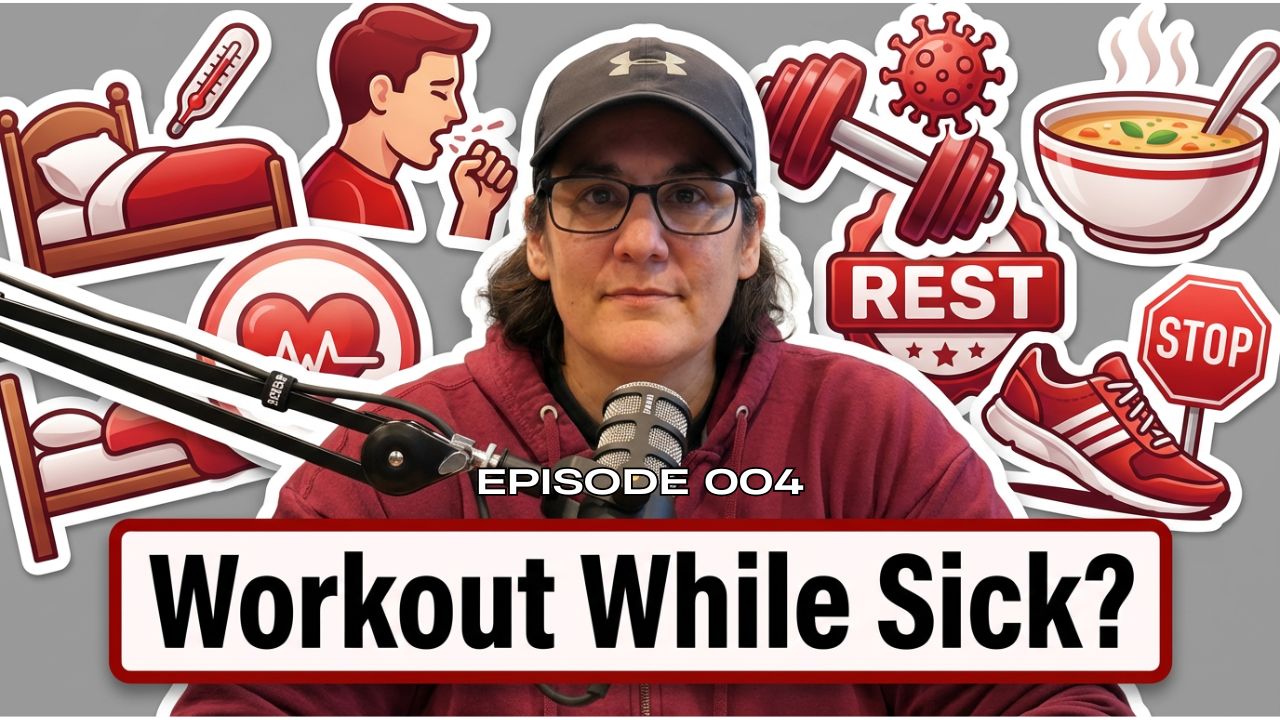
In this episode of Strength for the Journey, I’m getting personal about my recent battle with Influenza A and sharing the professional guidelines I use to decide when to train and when to rest.
Watch the Full Episode
The 7 Rules for Navigating Fitness and Illness
1. Don’t Be “That Person” at the Gym
If you are sick, stay out of public workout spaces. It doesn’t matter if you feel “good enough” to train; nobody else wants your germs on the dumbbells or the treadmill. If you decide you are well enough for movement, take it outside for a walk or do a modified session at home. Respect your community—keep your germs to yourself!
2. Use the “Neck Check” Rule
This is the gold standard for deciding if your body can handle a workout.
- Above the Neck: If your symptoms are limited to a runny nose, sneezing, or a mild sore throat, a light workout is usually okay.
- Below the Neck: If you have chest congestion, a hacking cough, stomach issues, or body aches, your body is screaming for rest. Listen to it.
3. The Fever Rule is Non-Negotiable
If you have a fever, do not exercise. A fever means your body is already in an internal war to fight an infection. Adding the stress of a workout can be dangerous and, in extreme cases, lead to heart complications. Wait until you have been fever-free for at least 24 hours (without the help of Tylenol or Ibuprofen) before heading back.
4. The 50% Rule for Intensity
When you do decide to move with mild “above the neck” symptoms, cut your usual intensity and duration by at least half. This isn’t the time for a heavy lifting session or a PR; it’s about maintaining the habit without draining your battery.
5. Beware the “Open Window” Effect
Intense exercise actually suppresses your immune system for a few hours afterward. This “open window” makes it even easier for a virus to take hold, potentially turning a 2-day cold into a 2-week ordeal.
6. Don’t Fall for the “Sweat It Out” Myth
You cannot sweat a virus out of your system. In fact, trying to do so usually leads to dehydration, which is the last thing your body needs when it’s trying to heal. Focus on water and electrolytes, not sweat.
7. The 2-for-1 Recovery Rule
For every day you were completely sidelined and off your feet, give yourself two days to gradually ramp back up to your full intensity. Your body needs time to rebuild its stores after fighting off an illness like the flu.

The Bottom Line
Fitness is about long-term health, not just one individual workout. Giving yourself permission to rest when you’re unwell isn’t “failing”—it’s the smartest thing you can do for your long-term progress.
Ready to get strong for real life?
*Subscribe to the podcast on Apple Podcasts or Spotify.
Follow my journey on Instagram for more tips and behind-the-scenes updates!
Leave a Reply